Author: Edison Yeung
Updated: February 24th 2026
Project Introduction:
I am working on an educational comic that deals with the topic of failure in sports and how it leads to skill development. The comic revolves around a young basketball player who misses an important shot in a Finals championship game and later on feels embarrassed and discouraged about it. The player then has a conversation with a coach and realizes that failure leads to skill development.
I chose this topic because young athletes usually link their self-esteem with their sports performance. Failure in a sports environment is very public and emotional. I wanted to create a comic that would shift the focus of missed shots and losses to skill development.
Some people may struggle more than others do. For example, an athlete who is very hard on themselves or an athlete who gets nervous in games may get disheartened easily about making mistakes. This is something that I can definitely relate to because I used to be a nervous athlete who always thought about mistakes that I made in games and thought that I had lost all my confidence after making one mistake, like missing a shot in basketball. In these cases, it seemed like only that one mistake was relevant.
The bulk of the progress that people make in basketball happens behind the scenes, so to speak. Most people who are young only see the end result of something like making a mistake in basketball or losing a game, and do not always realize that this is part of the learning process. They need to realize that mistakes are part of the learning process and that progress happens because of this learning, not because of perfection. They also need to realize that they can be confident about themselves because progress happens because of this learning, not because of perfection.
My goal is to create a comic that feels engaging for upper elementary and middle school students (ages 10–14) while teaching psychological concepts such as growth mindset, deliberate practice, and self-reflection.
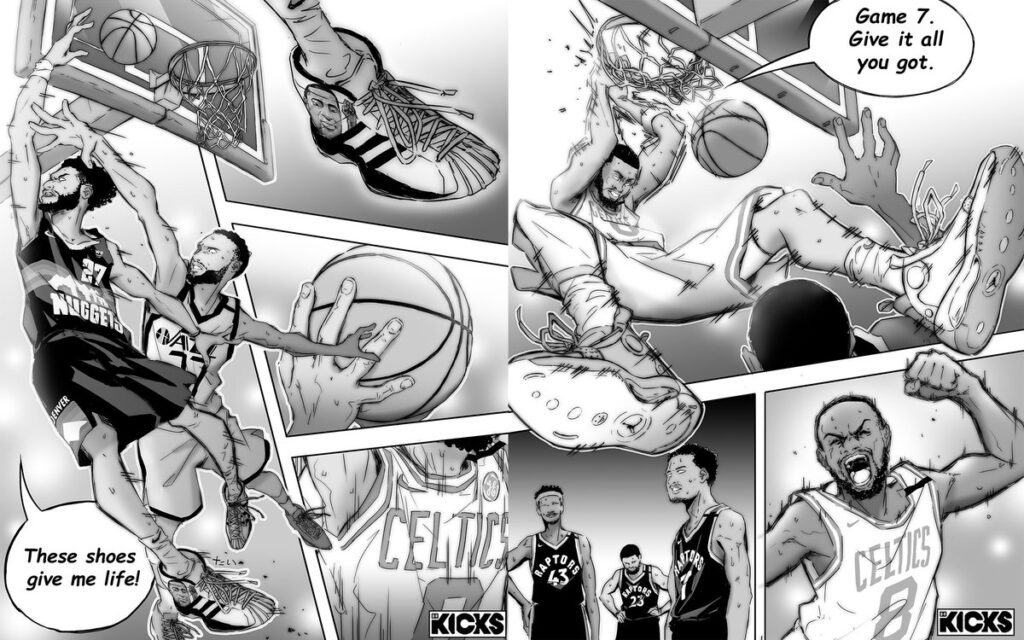
The comic format allows exaggerated emotional expressions, dynamic movement panels, and visual metaphors (such as replay frames and thought bubbles) to represent cognitive and emotional processes. Throughout the design process, I am intentionally applying multimedia learning principles to ensure clarity, focus, and reduced cognitive overload.
The Process:
Understand (Discover, Interpret, Specify):
Describe the Challenge:
Athletes, especially younger ones, often feel frustrated with their performance if it does not live up to their expectations, such as missing shots or making errors during games. Frustration usually lead to a lack of confidence, avoiding difficult skills, and quitting too soon.
Context and Audience:
The main audience for this comic is young athletes between the age of 10 and 15 years, who are trying to learn how to deal with emotions, especially frustrations and perseverance. Some of them may not be aware that making mistakes is a part of learning, and they may need guidance, encouragement, or examples to help them understand that making mistakes is a way to learn and become better.
Young athletes are driven by a desire to become better, to be recognized by coaches and/or teammates, and to enjoy playing. Young athletes may vary in confidence, self-discipline, or practice habits. Young athletes can be extremely emotional, especially if they make a lot of mistakes, and may become distracted because of those mistakes.
This comic is set in a basketball game. To reach young athletes, it is written in a simple and easy-to-read manner, making it accessible to both young and experienced athletes, and it uses simple and relatable characters.
POV Statement:
A young sports person who is frustrated with mistakes needs to be taught how to look at mistakes as opportunities for development so that they can develop confidence and overcome difficulties, just as I had to do when I was nervous during my games.
Learning Objectives
- Primary Learning Objective: Students will be able to apply the concept of missed shots and errors in basketball as opportunities for development rather than as indicators of failure.
Sub-learning objectives:
- Understand that errors and missed shots are a part of the learning process in sports.
- Learn to recognize how errors and missed shots can be used as specific feedback on performance.
- Analyze their own emotional reactions to errors (frustration, embarrassment, anxiety), and recognize that these reactions are normal.
- Identify how errors provide specific feedback about technique, timing, decision-making, or focus.
Ideation:
While brainstorming for this comic, I thought a lot about my own experiences playing basketball, especially those situations where I missed crucial shots. I thought about how it feels to be in a game where the score is tied, with the crowd cheering, and having all eyes on you. In those situations, the pressure feels huge. When you miss, it is as if you have let all those people down. These are real thoughts and feelings that came to me while brainstorming for this comic, and they contributed to the main idea and emotions behind it.
I thought a lot about what goes through your mind when you make a mistake. When you miss a crucial shot, it is not just your game, it is your confidence too. You start thinking, “Why did I mess up?” or maybe even, “Maybe I’m not good enough.” These are thoughts that I wanted to depict in this comic because they are very real, not just in basketball but in school and other areas too. As everyone has moments where they doubt themselves.
I also thought about situations that many young players face, especially when making mistakes in front of their teammates or during crucial games. This situation might cause embarrassment and stress for the players. That is why I decided to add these elements in the panels to show the pressure on the character so readers could understand the situation better.
On the other hand, I didn’t just want to tell a story about failure in a game. I thought about the situation in real life when a person misses a shot, which might teach them something new. This is why I came up with the turning point in my comic, where the missed shot is not the end but rather the beginning of improvement.
In the end, despite the fact that my comic is based on a basketball game, it is actually a story about learning from mistakes. I wanted to show readers that failure does not define a person. What defines a person is their ability to learn from their mistakes and move forward.
Storyboard:
13 pictures illustrating a young basketball player missing an important shot, feeling frustrated, getting advice from a coach, and learning to turn the mistake into an opportunity for improvement. All panels are created using Canva.


Leave a Reply
You must be logged in to post a comment.